

Blog
Your Foam Cannon Isn’t Broken — Here’s Why Your Foam Looks Weak

Why Is My Foam Cannon Not Producing Thick Foam? 7 Common Reasons & How to Fix It
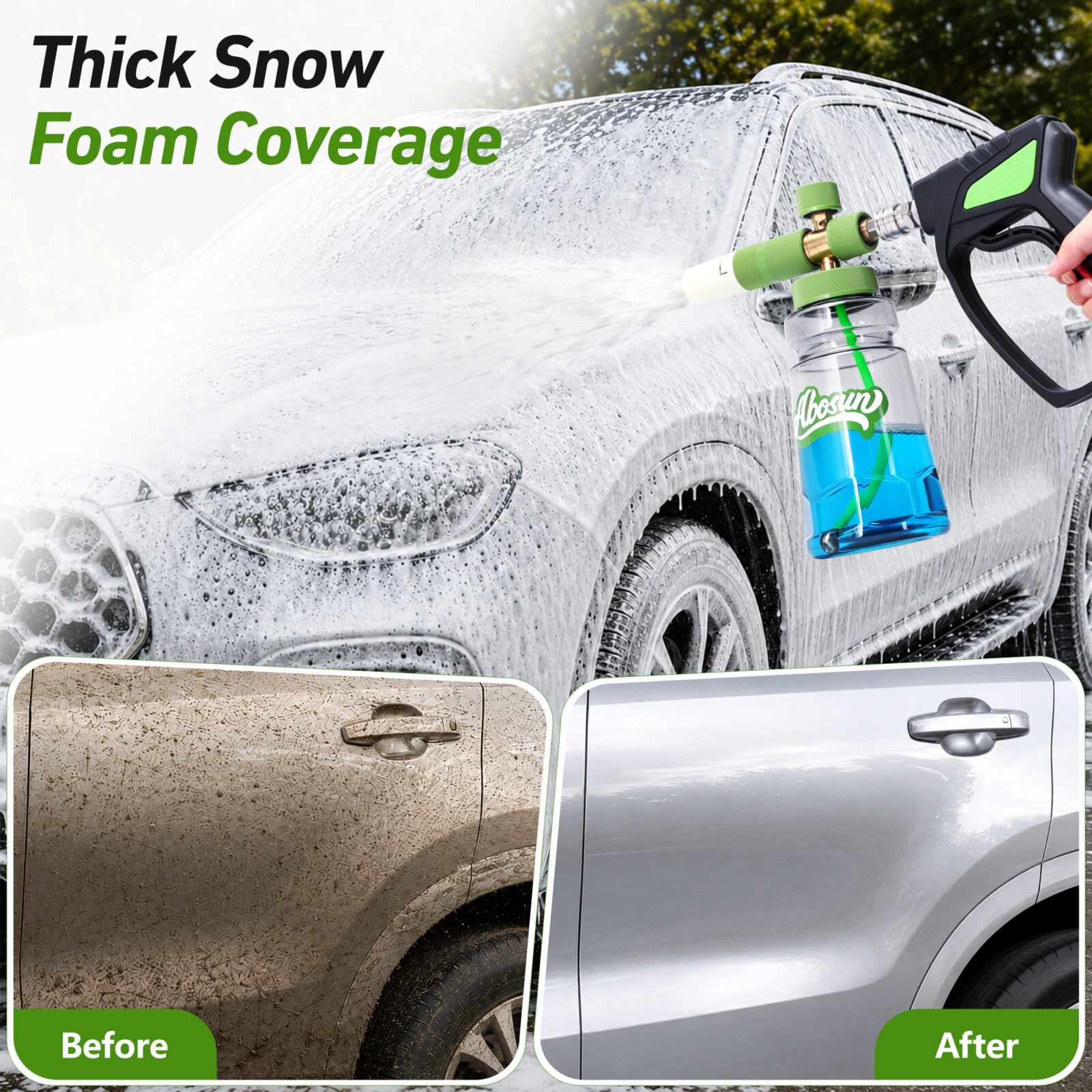
If you’ve ever watched a car detailing video online, you’ve probably seen it:
A pressure washer sprays out a thick blanket of white foam. The entire vehicle is covered in a layer of shaving-cream-like suds. It looks satisfying, professional, and effortless.
Then you try it yourself.
You connect your foam cannon, add your favorite car wash soap, pull the trigger…
And instead of thick snow foam, you get watery bubbles that disappear almost instantly.
So what happened?
Did you buy the wrong foam cannon? Is your pressure washer too weak? Are you using too much or too little soap?
The truth is: foam quality depends on several factors working together. A foam cannon is only one part of the system.
In this guide, we’ll break down the most common reasons your foam cannon is not producing thick foam and what you can do to improve your setup.
1. Your Pressure Washer May Not Match Your Foam Cannon
One of the biggest mistakes people make is assuming every foam cannon works the same with every pressure washer.
Your pressure washer’s PSI (pressure) and GPM (water flow) both matter.
PSI tells you how much force the water has.
GPM tells you how much water your machine moves.
A foam cannon needs enough water flow to create the right mixture of soap, air, and water. If your pressure washer does not provide enough flow, your foam may look thin no matter how much soap you add.
For example:
Small electric pressure washers may struggle with some foam cannons.
Higher-flow machines usually create thicker foam.
Matching the correct nozzle size to your machine can make a noticeable difference.
Before replacing your foam cannon, check your pressure washer specifications first.
2. The Nozzle Size Can Change Your Foam Performance
Many detailing enthusiasts discuss nozzle sizes because they can affect how your foam cannon performs.
Common sizes include:
1.1 mm nozzle
1.25 mm nozzle
1.3 mm nozzle
A smaller nozzle can increase restriction and may work better with lower-flow machines.
A larger nozzle can allow more water flow and may work better with higher GPM pressure washers.
There is no single “best” nozzle size for everyone.
The right choice depends on your pressure washer.
A common mistake is copying someone else’s setup without checking whether their machine has the same specifications.
3. Your Soap Dilution Ratio Matters More Than You Think
Many people think:
“More soap equals more foam.”
But that is not always true.
Using too much soap can waste product without creating better foam.
Using too little soap can create weak foam.
Most foam cannon bottles require a balance between:
Water amount
Soap concentration
Foam adjustment setting
A good starting point is usually following the soap manufacturer’s recommended ratio, then adjusting based on your results.
Different soaps behave differently.
Some create thick shaving-cream foam.
Others are designed more for lubrication and gentle cleaning.
4. Check Your Foam Cannon Filter and Pickup Tube
A small blocked filter can seriously affect foam performance.
Inside many foam cannons there is a small mesh filter that helps control the soap mixture.
Over time, it can collect:
Soap residue
Dirt
Mineral buildup
If the filter is partially blocked, the foam cannon may not draw enough soap.
Before buying a replacement, try:
Removing the filter
Cleaning the mesh
Checking the pickup tube
Making sure everything is installed correctly
A simple cleaning can sometimes restore performance.
5. Water Quality Can Affect Foam
Believe it or not, your water can affect your foam.
Hard water contains minerals that can interfere with soap performance.
If you notice:
Weak foam
Soap spots after drying
Difficulty rinsing
Your water quality may be part of the problem.
Some enthusiasts test their setup using filtered or distilled water to compare results.
6. Adjust the Foam Cannon Settings Correctly
Many beginners install a foam cannon and immediately assume something is wrong.
But the adjustment knobs make a huge difference.
Most foam cannons allow you to adjust:
Soap mixture amount
Spray pattern
Foam thickness
Try adjusting slowly.
A small change can completely change the foam output.
Remember:
More foam does not always mean better cleaning.
The purpose of foam is to help loosen dirt, reduce friction, and make washing safer.
7. A Good Foam Cannon Is About the Entire System
A great foam cannon setup is not just about one product.
It is about matching:
✔ Pressure washer flow
✔ Correct nozzle size
✔ Quality soap
✔ Proper dilution
✔ Clean equipment
✔ Correct adjustment
When everything works together, you can achieve the thick foam coverage people expect from professional detailing videos.https://abosunclean.com/product/foam-cannon-kit/
Final Thoughts
If your foam cannon is producing weak foam, don’t immediately assume the product is defective.
Start by checking your setup.
Your pressure washer, nozzle size, soap ratio, water quality, and adjustments all play a role.
The goal is not just creating impressive-looking foam.
The goal is making your car washing process easier, faster, and safer.
With the right setup, even a weekend car enthusiast can achieve professional-looking results at home.
Frequently Asked Questions
Why is my foam cannon only spraying water?
Common causes include incorrect soap dilution, clogged filters, low water flow, or incorrect adjustment settings.
Does more PSI always create better foam?
Not necessarily. Water flow (GPM) is also important. A balanced setup creates better foam.
How much soap should I put in a foam cannon?
It depends on the soap formula and foam cannon size. Start with the manufacturer recommendation and adjust from there.
Is thick foam actually better?
Thick foam looks impressive, but cleaning performance also depends on soap quality, dwell time, and proper washing technique.

 Sewer Jetter