

Blog
Why Does My Sewer Line Keep Getting Clogged?

Why Does My Sewer Line Keep Getting Clogged?
If your sewer line keeps getting clogged, you’re probably wondering why the same problem keeps coming back.
You clear the blockage, everything seems fine, and then a few weeks or months later, the drains slow down again.
The problem is that a recurring sewer clog usually isn’t just bad luck. Something may be building up inside the pipe, restricting water flow, or causing debris to get trapped.
Here are seven common reasons your sewer line keeps clogging—and what you can do about them.
1. Grease and Oil Buildup
Grease is one of the most common causes of stubborn drain and sewer clogs.
When you pour cooking grease or oil down the drain, it may go down easily while it’s hot. But as it cools, it can stick to the inside of the pipe.
Over time, more grease, food particles, dirt, and other debris can stick to that buildup.
Eventually, the opening inside the pipe gets smaller and smaller, making it harder for water to flow through.
What to do: Avoid pouring grease and cooking oil down your drains. If buildup has already formed, the pipe may need a more thorough cleaning rather than simply clearing the opening.
2. Dirt, Sludge, and Other Debris
Your sewer line carries a lot more than just water.
Over time, dirt, sludge, soap residue, and other debris can collect along the inside of the pipe. If enough buildup accumulates, water flow can become restricted and another clog can form.
This is one reason a sewer line may seem fine right after being cleared but start acting up again later.
The blockage may have been removed, but the buildup around it was never completely cleaned out.
3. Tree Roots Growing Into the Pipe
If your sewer line runs underground near trees, roots can become a serious problem.
Small cracks or loose joints in an underground pipe can give tree roots a way inside. Once they get in, the roots can catch toilet paper, grease, dirt, and other debris.
That creates a perfect spot for a blockage to grow.
If you keep dealing with clogs in the same section of your sewer line, tree root intrusion may be one possible cause.
4. Old or Damaged Pipes
Sometimes the real problem isn’t the clog—it’s the pipe itself.
Older sewer lines can develop cracks, separated joints, corrosion, or damaged sections. These problems can create areas where debris collects more easily.
If you’ve cleaned the same sewer line several times and the clog keeps coming back, there may be an underlying pipe problem.
Cleaning can remove the buildup, but it won’t repair a damaged pipe.
5. Flushing Things That Don’t Belong in the Sewer Line
Your toilet can handle toilet paper and human waste. It isn’t designed to handle everything else.
Wipes, paper towels, feminine hygiene products, and other materials can cause problems because they don’t break down as quickly as regular toilet paper.
Even if something is marketed as “flushable,” that doesn’t necessarily mean it will move through your sewer system without causing problems.
A simple rule is:
If it isn’t toilet paper or human waste, don’t flush it.
6. The Previous Cleaning Didn’t Remove Everything
This is a common reason clogs keep coming back.
You may clear enough of the blockage to get the water flowing again, but that doesn’t mean the inside of the pipe is completely clean.
Grease, sludge, dirt, and other buildup can remain stuck to the pipe walls.
Once water starts flowing again, new debris can stick to that remaining buildup and slowly create another blockage.
That’s why some sewer clogs seem to disappear and then suddenly come back.
7. Heavy Buildup Deep Inside the Pipe
When buildup is deeper inside the sewer line, a basic drain snake may not be enough to thoroughly clean the pipe.
A high-pressure water jet can help break up and flush away grease, sludge, dirt, and other buildup from inside the line.
This is where a sewer jetter hose can be useful.
Connected to a compatible pressure washer, a sewer jetter hose sends high-pressure water through the pipe to help clean the inside of the line and flush debris away.
For homeowners who regularly deal with slow drains, recurring clogs, or buildup inside their sewer lines, it can be a practical tool to have on hand.
[Shop Our Sewer Jetter Hose →]
How to Help Prevent Sewer Line Clogs
Once you get your sewer line flowing again, the last thing you want is another clog a few weeks later.
A few simple habits can help reduce buildup and keep things moving:
- Don’t pour grease or cooking oil down the drain.
- Don’t flush wipes, paper towels, or other non-flushable items.
- Pay attention to slow drains before they turn into a major blockage.
- Clean out buildup before it has a chance to become a serious clog.
- If your sewer line tends to collect grease, sludge, or dirt, consider cleaning it periodically.
- Keep an eye out for recurring clogs, since they may indicate buildup deeper inside the pipe.
The Bottom Line
A sewer line that keeps getting clogged usually has a reason.
It could be grease buildup, dirt and sludge, tree roots, damaged pipes, or a blockage that was never completely cleaned out.
The key is to deal with the buildup—not just the symptom.
For stubborn buildup inside the line, high-pressure water cleaning can help break up and flush away debris.
And with the right sewer jetter hose and pressure washer, you can tackle many routine sewer and drain cleaning jobs yourself.

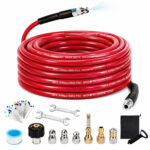 Sewer Jetter